
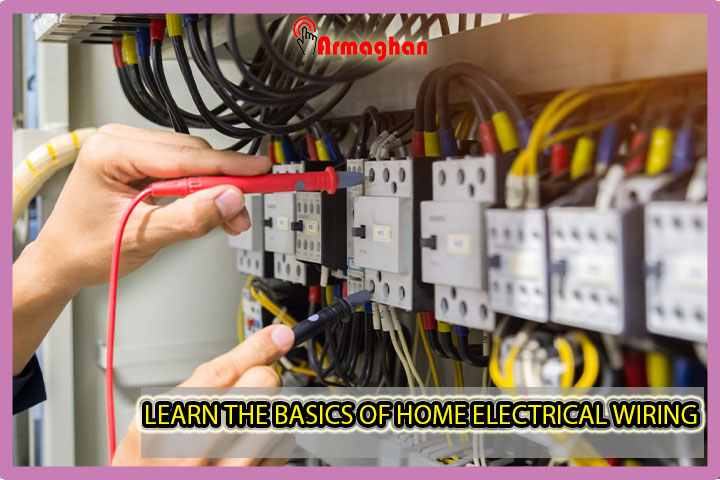
Electrical wiring can be tricky—especially for the novice. That’s why it’s usually best to hire a professional for anything other than a simple job. Otherwise, you could risk injury, damage or fire. If you do plan to complete a DIY project that has an electrical component, there are some basic things to know about wiring installation.
Understanding electrical wiring
Since the 1940s, any house built (or any older home that has been rewired) has had to follow an electrical code: the NEC—written with safety in mind. NEC code identifies types of electrical wires and electrical cable types by color. When you remove a switch plate, you’ve probably noticed yellow, white, black, red or green wires. They are not there to be decorative; each serves a specific purpose, and some don’t play nicely with others.
How to Connect electrical wires
When you’re doing wiring installation, you need to identify the parts of the wiring cable, the non-metallic electrical cable: the outer sheathing (the jacket) and the inner wires. The colored “wire” you see—the green, black, red, blue or white—is actually the sheathing that covers the inner copper wires. If you look closely, you’ll see markings stamped on the sheathing to let you know the number and gauge of wires inside. The color of the sheathing lets you know what each wire does.
What type of wire is used for residential?
Most modern homes use nonmetallic (NM) cable that consists of two or more wires wrapped inside the colored sheathing mentioned previously. The package of wires usually contains one or more hot wires plus a neutral and a ground. To accommodate wiring in an older home or if your wiring just needs work, you can splice the old wires with new NM cable using a junction box that protects wire connections. The larger circuit wires carry circuit voltage that can be really dangerous to touch. If you don’t know what kind of wires you have, consider them all to be dangerous.
Electrical wiring mistakes to avoid
- Never connect wires outside of electrical junction boxes. If there’s no box, add one and connect the wires inside it.
- Remember the three-inch minimum on wire length. Don’t cut your wires to short. IF you do, add six-inch extensions.
- Never leave sheathing unprotected between frames, as in a ceiling installation. Staple it to a 2×2 or use metal conduit if the wire runs along the wall.
- Avoid loose switches or loosely connected outlets.
- Never install a three-slot receptacle without a ground wire.
- Don’t recess an electrical box behind a wall surface. Instead, add a wall extension.
- Secure cable with a clamp so wire insulation doesn’t cut or fray.